• About
    • Educational Philosophy
    • Research
  • Courses
    • Study Tips
    • Digital and Scientific Literacy (Let’s Talk Science)
    • Science 9
    • Wellness 10
    • Financial Literacy 10
    • Mental Health Studies 20
    • Environmental Science 20
      • Nature of Environmental Science
      • Atmospheric Systems: Air Quality and Climate Change
      • Human Population
      • Aquatic Systems
      • Terrestrial Ecosystems
    • Gaming Education
      • RPG Maker 2000
    • Gender and Sexual Diversity 20
      • Deepening the Discussion Toolkit – Ministry of Education SK
      • NFB – Sexual Orientation and Gender Identity Media
    • Health Science 20
      • Nutrition
      • Human Body
      • Diagnostics and Treatment
      • Health Care Philosophies and Ethics
      • Career Exploration (HS20-CE1)
    • Biology 30
      • Characteristics of Life and Evolution
      • Anatomy and Physiology of Multicellular Organisms
      • Cell Processes
      • Genetics and Chromosomes
    • Science 10
    • Math
    • AP® Biology
      • Course Outline and Introduction Assignment
      • AP Biology Exam Prep
      • Big Idea 1: Evolution
      • Big Idea 2: Biological Systems and Energy
        • Energy-Related Pathways
      • Big Idea 3: Information Storage and Transfer
      • Big Idea 4: Biological Interactions
      • Blog Post Information
  • Podcasts
    • Learning Together – A Prairie South Podcast
    • Let’s Talk Science Podcast Collection
    • A Moment of Entangled Truth: A Science Education Podcast
  • Presentations
  • Education Blog
    • Science Education
      • One of an Infinite Means to Approach Science, Education, and the Universe: Part 1 – Nature of Science
      • One of an Infinite Means to Approach Science, Education, and the Universe: Part 2 – Objectivity, Subjectivity, and Perspective
      • One of an Infinite Means to Approach Science, Education, and the Universe: Part 3 – Life & Kinship
      • One of an Infinite Means to Approach Science, Education, and the Universe: Part 4 – Science Education
      • Developing a high school science digital citizenship resource
      • Maximizing Education for Digital Literacy
      • Scientific Literacy and Digital Citizenship Lessons
      • Digital Literacy in Saskatchewan Science: A Curriculum Guide
    • ECI 832 – Digital Citizenship & Literacy
      • Maximizing Education for Digital Literacy
      • Digital Learners and Digital Wisdom in a Digital World
      • Transgenerational (Digital) Citizenship Education
      • Developing a high school science digital citizenship resource
      • Digital Identity: Past, Present, Future
      • The Need for Media Literacy
      • Can we ever be “fully literate” in all dimensions of literacy?
      • My critical, digital life.
      • A Media Literate Rhapsody
    • ECI 834 – Distance Education
      • Closing the distance between distance education and myself.
      • (re)Creating a virtual educator.
      • LMS or VLE? Don’t matter to me! Canvas? Let’s see.
      • Can an educator become YouTube famous? Creating, comparing and critiquing an educational Vlog.
      • Blended learner = blended educator.
      • Barriers to blended/hybrid/mixed-mode/distributed learning.
      • Online community-buildin’ probs (problems).
      • Agoraphobia in education.
      • Module-making: finishing touches to going worldwide.
      • Teaching for EVERYBODY.
    • ECI 833 – Educational Technology
      • Can’t fight the #EdTech juggernaut.
      • Learning as a chaotic, evolving mosaic.
      • The digital life of a teacher-entertainer.
      • Educational software is changing for us, and us for it.
      • Stop villainizing the internet.
      • Distance education: bringing the Mr. Petlak Classroom Experience Worldwide?
      • Determining pros and cons myself of modern internet learning as self-determination.
      • I’m not secretive, I’m Socrative; Assessing Assessment Tools.
      • Assistive technology knows no bounds!
      • A whole new world: virtual and augmented reality.
      • Ed Tech is/has always been about us and our learners.
    • ECI 831 – Social Media and Open Education
      • ECI 831 – Major Project – Piano
        • Synthesia and Pre-Assessing My Piano Skills
        • Let the chords be with you.
        • Piano: Don’t cut (chord) corners.
        • Learnin’ piano on the go, bro!
        • Revelations: feedback and music/language learning
        • Piano injuries: movement retraining.
        • Learning piano: Patience, hard work and connections that transcend time.
      • How I overcame #edtech anxiety.
      • Being a devil’s advocate teacher.
      • I M Connected. R U? U R?! GR8.
      • “You’re born a teacher”. Making teaching a science?
      • When your teacher Snapchats in class.
      • Why do Students Snapchat? Intimacy and Connectedness.
      • Harnessing social media: anonymity and digital citizenship
      • Fundamental rights of open education.
      • Looking at the digital educator narrative, wearing Googles.
      • Net neutrality, safety in ambiguity, equity, and a digital(ly) divide(y).
      • Normalcy and “justifying” online harassment
      • Sharing an idea: the perks of Slacktivism
      • ED Goals: Continue to connect, learn, question and improve.
    • ECI 830 – Issues in EdTech
      • Defining what exactly #EdTech is.
      • EdTech in class doesn’t just enhance learning, it IS learning.
      • Just Google it? Just Google it right. Building from simple to complex.
      • Games, technology and student learning and well-being
      • Sharing and openness. A moral imperative, even on social media.
      • Social media IS childhood.
      • Good intentions and what is morally just make EdTech equitable.
      • Should you sell your educating soul for the right reason (students)?
      • Dialled in, plugged in, and loving life.
      • Educate and you will be gold.
  • Health Ed Resources
    • Be There Certificate
    • Mental Health Literacy (TeenMentalHealth)
    • Canadian Guidelines for Sexual Health Education
    • Deepening the Discussion: Gender and Sexual Diversity
    • Teaching Sexual Health
      • Teaching Sexuality Wheel
    • Sex & U
      • Sex & U – Contraception Methods Booklet
    • Planned Parenthood
  • EdTech: Resources & Tools
    • General Resources
      • Google Read&Write
      • Flocabulary
      • Super Teacher Worksheets
    • Assessment Tools
      • Kahoot!
      • Seesaw
    • Science & Math Resources
      • Let’s Talk Science
      • Nutrients for Life
      • Zorbits Math
      • Teach Engineering: STEM Science Lessons
      • Prodigy – Math Game
      • Math Tasks for Sask Curriculum (AirTable)
      • MathUp
      • Secondary Science Implementation Support – Resources
      • Gizmos – Science & Math Simulations – Subscription Required
      • BioInteractive – Science Activities
      • PhET – Interactive Science Simulations
      • Desmos
      • Science Current Events Sites
        • Science News for Students
        • IFLScience
        • EurekAlert!
    • Teaching Typing
      • Typing.com
      • Typing Club
    • Coding
      • SaskCode
      • CodinGame
      • CS First
      • Scratch
      • Code Combat
    • Digital Citizenship
      • Digital Citizenship Education in Saskatchewan Schools
      • TeachThought
      • Crash Course Navigating Digital Information
      • Common Sense Education
      • Media Smarts
      • Web Literacy for Student Fact-Checkers
      • Interland – A Digital Citizenship Game
    • Open Education
      • OER Commons
      • Open Stax
      • Open Textbook Library
      • Open Text BC
      • EdX: Free Open Online Courses
      • Coursera

Logan Petlak

~ Lifelong Learner.

Logan Petlak

Category Archives: ECI 831 – Major Project – Learning Piano

Learning piano: Patience, hard work and connections that transcend time.

18 Monday Apr 2016

Posted by loganpetlak in ECI 831, ECI 831 - Major Project - Learning Piano

≈ 2 Comments

Tags

bloom's taxonomy, castle of glass, connect, connections, ECI 831, eci831, learning project, learningpiano, learningproject, music, music and language, open education, piano, piano chord, practice, teacher, universal language

General thoughts and reflections

In recent weeks, I have focused on playing piano using my full hand range (by practicicing the opening baseline of Castle of Glass by Linkin Park), maintaining proper posture and playing with my left hand in addition to my right simultaneously… but this is taking a long time to progress. The most important thing I’ve had to remind myself is patience. Not surprisingly, there are no short-cuts to success with physically playing the piano. Your body has to be taught the movements in order to experience success. In understanding terminology, tricks for learning can occur much like it would learning from a textbook in the classroom, but you still need to understand and apply aside from memorize (Bloom’s taxonomy). What are some things that have stood out for me?
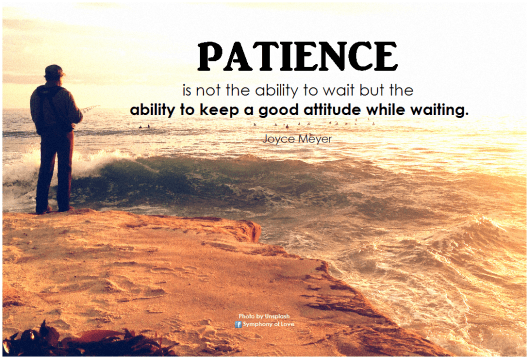
14546646743_d46dc9e3c3_o

Key points that I’ve noticed in my development and tips you can use.

  • I still need to keep learning different chords and songs I enjoy. And play them to completion, not just the parts I like. But some parts of songs may teach certain things (chords or hand range).
  • A song I enjoy is so much easier to play (practice).
  • I’ve only scratched the surface of learning piano. Be patient.
  • I need to maintain and honour a regular schedule to keep playing regularly, it’s easy to get caught up in life and skip a day or two sometimes.
  • Some songs I am simply not ready to learn/play yet.
  • It isn’t easy to play piano while singing… but can be very rewarding when achieved, even if you can just hum it to start.
  • Playing with two hands can be done, but learn one hand at a time and then combine them together.
  • There is no limit to resources out there, but some may be different, find what’s accurate and works best for you.
  • Maintain good posture and consider getting an instructor to critique you for even a brief amount of time. I was fortunate to work with a music teacher in person, but many virtual piano courses are available.
  • It is so amazing to be listening to the radio, hear a song, and think: I bet I could play that.

It is so amazing to be listening to the radio, hear a song, and think: I bet I could play that.


Recommendations on resources to learners.

I really enjoyed using Synthesia. If you can drop thirty dollars (USD) to purchase it, I found it very useful used in combination with Free Midi. Searching on Google or on YouTube is an easy way to find tutorials on songs, terminology, or instructors/courses available on-line. Some of which are free for the frugal!

What’s next?

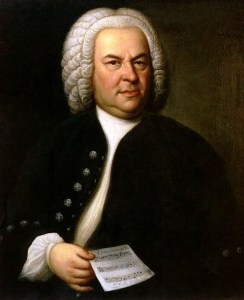
Did I achieve all of my goals? No. But learning is never complete and my journey with the piano is no exception to this idea. In addition to the goal of learning the four chord song one day, as I’ve made countless references to… this classic below by Johann Sebastian Bach looks like another goal to learn in the future. The video below is slowed down enough for me to follow along while I play (if I can’t find a midi). I considered learning classical at the start of the term, but just hadn’t got around to it yet. After reading about Bach, I was reminded about the universal language that is music. That a song that someone composed close to three hundred years ago can make my spine shiver and emotions echo that of an individual who lived in a world not as connected like mine. But this connection through music transcends time, worldview and language. This serves as a reminder of why patience and hard work is important in learning music… and while I believe that success will look different for all students, he did (apparently) provide this quote to close on:
Johann_Sebastian_Bach

Johann Sebastian Bach via Wikipedia

“I worked hard. Anyone who works as hard as I did can achieve the same results.”
Johann Sebastian Bach from BrainyQuotes


Have you been learning an instrument? Would you emphasize patience as well? Let me know below!

Logan Petlak
Piano injuries: movement retraining.

29 Tuesday Mar 2016

Posted by loganpetlak in ECI 831, ECI 831 - Major Project - Learning Piano

≈ 1 Comment

Tags

Alison M Sparrow, corner gas, davis quinton, ECI 831, eci831, Learn piano, learning project, teacher, wrist soreness

Learning chords and piano these days has been taking a toll on my wrists. I had to figure out why. Self-deprecatingly, I assumed I was either weak-wristed or doing something wrong. So I asked the internet, and so did Bradd Szonye, and his quote and question was similar to mine: “Do I need to do something different, or do I just need to build more strength?” It was the first… although after digging into comments, his problems ended up not being exactly similar to mine.

My search for the causes took me to PianoMap.com and it identified the possible causes of my pain, whether it was muscle or tendon-based, or both:

  1. Co=contraction – two muscles working simulatneously against one another.
  2. Awkward positions – this one is a no brainer. I’m the king of awkward positions, situations, and comments.
  3. Static muscular activity – repeating a similar motion of contraction can cause pain.
  4. Excessive force – playing piano doesn’t require much force, but “it is easy to fall into the habit of using more force than needed”. Yeah, I did that.

Solution to my pain?

“The person must learn to play the piano using non-stressful movements to perform the tasks that were formerly performed with stressful movements” – PianoMap.com

Summarized? Relax and stay in a position that keeps you relaxed. I need to “retrain” my “movement”, but how do I learn the right movement online? Is there a free online instructor? Hello, Youtube.

Alright Alison M Sparrow, what are some common mistakes, and what is proper movement and posture?

Knuckles, wrists, elbows in a line. Deal.I decided to confirm her credentials. She’s got ’em. I trust her and her 200,000 subscribers. She even offers a Skype lesson component for $40! AND AND AND! TWITTER AND A BBC SHERLOCK HOLMES PIANO TUTORIAL!

Sorry its late, but I have just uploaded and easy Sherlock Holmes Theme piano tutorial! https://t.co/mPTbUv5eHO

— Alison M Sparrow (@AlisonViolinist) March 29, 2016

So, moving forward, found some more resources, addressed my issue of wrist soreness, hopefully I can work on my movements!


Corner Gas short-cut?

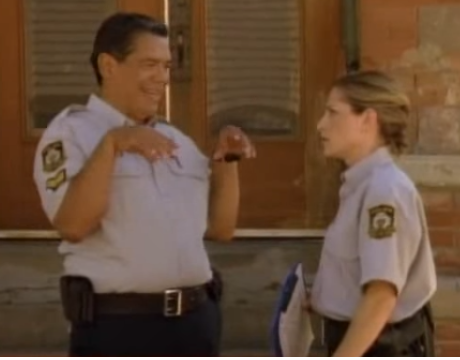
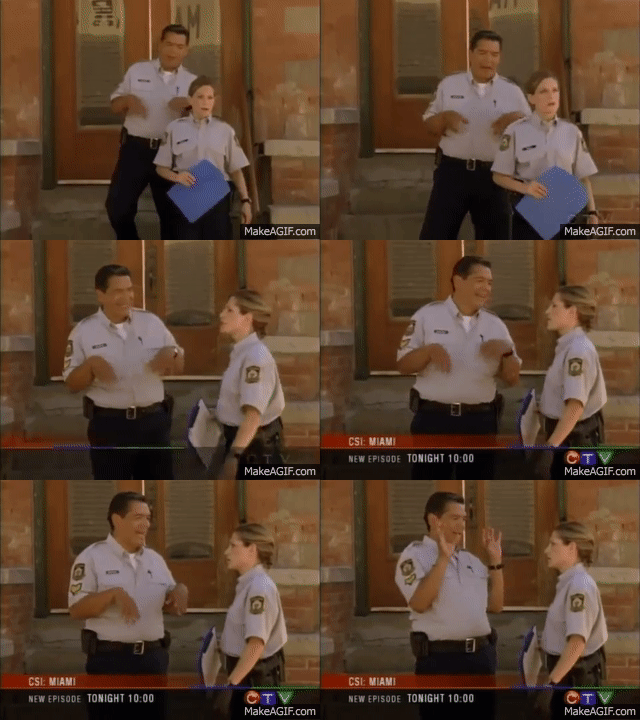
I could’ve avoided all this research had I just listened to Davis Quinton (Lorne Cardinal) of Corner Gas’ advice: “When you play piano you have to keep your fingers loose, like bear paws”. Yes, I’m aware that Corner Gas isn’t a solution for everything (but show me evidence that tells me it isn’t). Shout out to humour for health to laugh at even tough situations, like me struggling to learn piano.

//gifs.com/embed/lYE50V

One_Piano_Four_Hands_Part_2 (1)

“Bear Paws” via MakeaGIF.com


SIDE NOTE: I once mentioned looking into how to do looping with my piano, and I don’t have a good enough piano for it or I need to buy a Boss RC-2 or RC-20 loop station… around $200. Unfortunate, but perhaps an investment to make in the future if I want to get more serious about this.
Tips, comments, feedback? Let me know!

Logan Petlak

Ps. Oh yeah, and: Bear Paws.

davis bear paws

“Bear Paws” from Corner Gas: One Piano, Four Hands via Youtube

Revelations: feedback and music/language learning

22 Tuesday Mar 2016

Posted by loganpetlak in ECI 831, ECI 831 - Major Project - Learning Piano

≈ 3 Comments

Tags

English as an additional language, feedback, four chord song, language learners, Learn piano, music and language, piano chord

Amidst my piano “practicing” (henceforth referred to as “playing” as I read is beneficial for teaching children)… I have been putting in time at school and at home. Fortunately today, I got an inadvertent compliment from a student while I was playing (practicing) piano… specifically while I was playing the four chords: E, A, and B Major and a C#minor… “Mr. Petlak! I didn’t know you could play piano!” And naturally, in my typical self-deprecating manner, I responded “I can’t”, while laughing. She proceeded to tell me about how she likes to sing and make music but doesn’t feel she has the instrumental talent to support it. She even said she considered taking the Acapella angle (which I had tried in weeks past to loop my music).

Holy parallels, Batman.

I didn’t really grasp the depth of the conversation at the time but it was not only a connection made between two individuals around a love of music… but also a sharing of the struggle to express yourself via music… which sounds strikingly similar to that of the frustrations of an English language learner. Music has its own language. However, I never considered drawing a parallel between language learning and music learning. In light of this… it’s helping me to be more realistic and avoid frustration when I feel like I’m not learning piano as fast as I should be… and also appreciate the learning process in my classroom. I searched up if there was any correlation between the two and, I found on The Guardian that “just one hour a week of learning music is enough for the full brain benefits to take place – including an all-round boost in language skills and a significant increase in IQ.” Learning music can even help language learners? Does engagement have anything to do with this for language learners (Love music –> Engaged learner –> Learning language)?

image

Doll Star Fig Street Performer via Pixabay

In addition to the learning and relationship connections the student’s comment presented… I also received some of my first feedback from another individual albeit mildly non-descript. And I forgot about the importance of feedback until Sarah Wandy referenced it amidst her guitar learning. Am I perhaps too hard on myself? Or not hard enough? And written feedback through social media is great… but what about oral feedback? Sarah, also mentioned someone she was learning from told her “that it takes time to see progress!” And while I am impatient when it comes to playing the piano… I can take comfort knowing that if I just keep playing, everything helps!

Feedback, thoughts, questions? Let me know!

– Logan Petlak

Ps… I did this post entirely on my phone. Self-back-pat!

Learnin’ piano on the go, bro!

20 Sunday Mar 2016

Posted by loganpetlak in ECI 831, ECI 831 - Major Project - Learning Piano

≈ 2 Comments

Tags

chords, ECI 831, eci831, Google Play, Learn piano chords, learning piano, learning project, open education, piano, Piano Companion, Piano Scales & Chords Free, Samsung Galaxy S5, scales

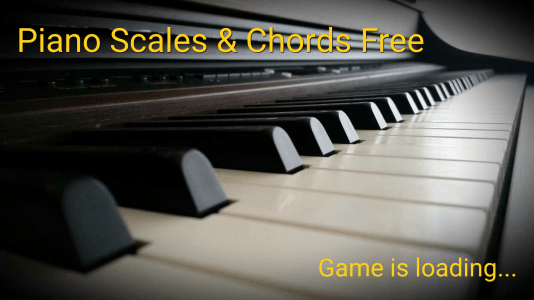
So, I’ve found that I’ve struggled to manage my time well and may not get as much piano practice in as I’d like… as a result, in addition to stepping my game up, I also considered that this poses a great opportunity, how can I learn piano while I’m always running around? Let’s learn piano chords on the go! Using my Samsung Galaxy S5, I downloaded some apps through the Google Play Store. And have been trying to use them to get a better idea of the chords… some I found are in the video below that I recorded using Zoom.us

Video details
In this video I explore a couple of apps for Android that I got for free from the Google Play Store.Specifically I look at learning some of the chords to play the 4 Chord Song.

Piano Scales & Chords Free
Review: Can play all notes simulatenously to get the proper sound of the chord. Thought it looked professional and user friendly enough and had games to help me learn, however the game is quite difficult to master. Has the names of all keys on the piano screen!
UPDATE: HAS INCORRECT CHORDS! – I thought my C# minor was off and it was… I was in fact playing a C# Major

Learn Piano Chords
Review: Simple view with large text. Cannot play all notes simultaneously on my phone. Has the names of all keys on the piano screen! Incomplete, only has beginner chords (okay for me in the short term).

Piano Companion
They also have a twitter to connect to!
Review: Most professional looking and has a large database. Cannot play all notes simultaneously on my phone. Has the names of all keys on the piano screen!

Screenshot_2016-03-19-17-51-40
Screenshot taken with Samsung Galaxy S5 via Piano Scales & Chords Free.
Closing
For all of the apps, they don’t teach the posture or finger dexterity required to play piano, but they do give me the visual of learning which keys to play for a particular chord. Most importantly, they are all free and extend my opportunities to play piano. And for you iPhone users out there. Piano Scales & Chords and Piano Companion are both available from the App Store… in addition to many other apps! I will continue to practice and keep you posted, but thus far, learning chords even just four of them has been a slow process!

Comments or suggestion of other apps? Let me know! Thanks!
– Logan Petlak

Piano: Don’t cut (chord) corners.

28 Sunday Feb 2016

Posted by loganpetlak in ECI 831, ECI 831 - Major Project - Learning Piano

≈ 1 Comment

Tags

chord fingering, chords, eci831, learningpiano, learningproject, major chords, teacher

Hello all!

Last week, I began learning about what exactly chords were. This week I actively walked through how to play some of them. While I covered more than are depicted on the video this is a good snapshot of my learning process. Including the realization that the root or naming of chords is based on what note or key on the piano is played and goes down the keyboard from there.

The Root

The root of the chord is always the easiest to find because it’s in the name of the chord! The root of an E Minor chord is E.
– Pianochord.com

I reviewed some of my previous learning of identifying notes on the keyboard and then began practising and learning 12 Major Chords.In this video I highlighted my learning of the C, F, G, D, and E Major chord.

Other Chords

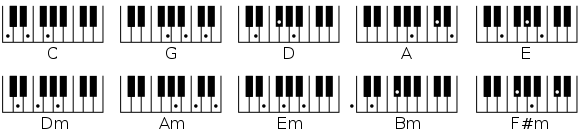
In my research I found pictures and websites to help me learn some of the chords (a chord is also called a triad)!

A Major – A C# E
Ab Major – (which I learned is “A Flat” – or a G# note up (right) from middle C – G# C D#
Gb Major – enharmonic with F# chord – F# A# C#
Bb Major – Bb D F
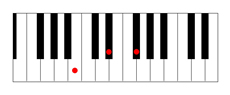
B Major – B D# F #

piano_chords
Piano Chords via Jeff Kaufman

Nuances of reading chords
Many of the pictures have middle C located, on the left as the first C in view.
B_major_keys
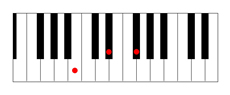
B Major Chord via Easy-Chords.com

What I learned with the circle of fifths told me that typically when we go flat (b) it is because we are down or left from middle C.

I also learned that “m” means that it is a minor chord.

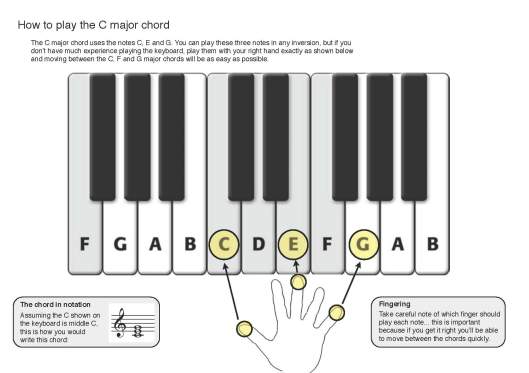
Hand placement with C Major
chord-fingering_page_1
Chord Fingering Page 1 via WordPress

And my learning was supplemented by Duane! There were many other videos out there, but this was part of a series of learning piano videos I could find myself revisiting.


Four Chord Song

In my learning process I keep gathering resources for the Four Chord Song, including the chord progression. I learned that my left hand will be playing E B C# and A… syncing up with the chords I need to learn E Major, B Major, C# minor, and A Major (no coincidence that the left hand notes are the main notes of these chords)…. and  I also found a video that helps, shown below.


As always, I welcome feedback and information! Comment below!

Logan Petlak

Logan Petlak

Follow Logan Petlak on WordPress.com

Contact Info

109 Ominica St W
Moose Jaw, SK
Treaty 4 territory
petlak.logan@prairiesouth.ca (for students); logan.j.petlak@gmail.com (for general inquiries)
Regular school hours!

Meta

  • Create account
  • Log in
  • Entries feed
  • Comments feed
  • WordPress.com

Categories

What are you looking for?

Create a free website or blog at WordPress.com.

Privacy & Cookies: This site uses cookies. By continuing to use this website, you agree to their use.
To find out more, including how to control cookies, see here: Cookie Policy
  • Subscribe Subscribed
    • Logan Petlak
    • Join 42 other subscribers
    • Already have a WordPress.com account? Log in now.
    • Logan Petlak
    • Subscribe Subscribed
    • Sign up
    • Log in
    • Report this content
    • View site in Reader
    • Manage subscriptions
    • Collapse this bar
 

Loading Comments...