Assistive technology knows no bounds!

Tags

, , , ,

Assistive Technology.

Helping the blind, see.

The immobile, move.

The voiceless, speak.

The awkward and anxious, share.

Poor-writers, compose.

The disconnected, connect.

Always developing, never complete.

Assistive technology is an enormous umbrella term. We think of devices developed to help the “disabled” typically as assistive tech (devices), but then we are inclined to extend the definition to include even adaptations in the classroom (services). But where is the line? If we include differentiation as assistive, do we include adaptation? There are extensions of the technology definition to include ideas and classroom practices so I should… but, wow, including that wide definition of technology with a wide definition of assistive tech will that be a infinitely inclusive term. When we consider the definition of assistive technology including means to maintain, increase, or improve the functional capabilities of a child with a disability… it feels like everything in a classroom will be included. As such, what responsibilities does the school and education system bear to make this happen? What counts as a disability warranting support? If we include supplying devices in a BYOD classroom to those who have them, who is obligated to supply this? Today, many schools must include WiFi, is this now a mandatory “assistive technology”?


This ridiculously inclusive approach now also breaks down the illusion of limitations provided by assistive tech. Why is it simply an illusion? Circling back to the concept of a growth mindset, assistive technologies are constantly being developed and improved for all types and abilities of students/individuals. The strides made in hearing aids allowing individuals to hear again are incredible.

The increasing ease of movement for those bound to wheelchairs is ever-evolving or making music available to those who have lost their hearing. The field encapsulates potential, and while there will be difficulties, is there also the potential for the enhancement of the human form as a result creating a gap between “typical” individuals and those with assistive technologies. What comes to mind is sprinters with prosthetic devices, are they meant to compete against those with regular legs? If performance is drastically increased, is this fair or equitable? If they can afford it, should they be allowed it? Wealth gap aside, consider even grandiose ideas about the direction of human evolution. Is this wrong?

Sarah Reinertsen via Pinterest

I would argue it isn’t wrong, but we simply compare those with similar technology to others with the same tech? Or is this further segregating us? As always, where is the line?

What is a measurable amount of support to be provided to individuals requiring assistive technology? How do we train our educators to be familiar with an ever-changing field?

Where do we head next? What about assistive technology for managing teacher stress and workloads?

What assistive technologies are available to mitigating stress and workloads for teachers? Online assessment tools help reduce marking – but does the net work put into establishing these translate to better learning outcomes for students? Is there a world in which we tell devices to assess learning of each student, highlighting common difficulties students may experience, or individual anomalies and allow teachers to simply focus on learning support and facilitation? Totally possible. Will that negatively impact what a teacher provides their students or result in “worse” teaching?

Comments? Answers? Thoughts?

Logan Petlak

I’m not secretive, I’m Socrative; Assessing Assessment Tools.

Assessment tools achieve assessment rules in assessment schools. Wisely choose or be an assessment fool. But what does an educator pick to be ‘assessment cool’?

Assessment Thoughts… and Kahoot

The ECI833 class came to a general acceptance and list of many digital assessment tools that are best used formatively. A large part of my experience with assessment tools, albeit limited, reinforced this belief. I had used Kahoot several times this year with my students but found that if students didn’t have their own device, or some had slower connections than others, it led to a misrepresentation of student understanding and has the potential to leave a small minority of students frustrated. Students may not be as successful with a timer (as I’ve used), and some get so caught up in the competition they will go with a speedy response rather than a calculated one for a chance to be in the coveted “top 5”. Therefore, formative, at best. (Kids love it though, just like in Heidi’s class, lots of excitement throughout the high school with grades nine-twelve finding enjoyment from it). I know that you can shut off the timer in Kahoot, but that takes some of the fun out of the activity for some of the students. In order to try and find a solution to the formative problems, I decided to look into the highly-touted Socrative.

Socrative

Socrative is “your classroom app for fun, effective classroom engagement. No matter where or how you teach, Socrative allows you to instantly connect with students as learning happens.”

So how does it work?

Email to login? Done.
Click on create quiz? Done.
Created a question? Done (see picture below).
Share account ID with a student? Done.
Student finishes quiz, I can see immediate feedback.
Pros – accessibility and very straightforward.
Challenges?

am-i-great-socrative

My first quiz from Socrative taken via Screenshot saved with Paint.

The biggest challenge was figuring out what the heck Space Race was. Fortunately, like mentioned above, that too was very easy to fire up and use. Upon using “Space Race”, it appears I’ll be able to scratch the competitive itch for my students that may be done by Kahoot as well. If students didn’t not have availability to a device, this may not be as useful, but they do, so no worries!

Visually, it is far more professional-looking than Kahoot (no offence meant). For my senior science courses, considering a digital  alternative (formative or summative) to paper quizzing, I have every intention of using it. Like any program, there is an incentive to spending money to widen its capabilities (for myself, only $30/year), but the free features are more than enough. You can use images, much like in Kahoot for the question process or combine images with questions.

I decided to look up websites that had lists of assessment tools to see how it compared, but most sites had it listed near the top or in the discussion of great tools (even the EduTechChick did)!

Why digital assessment?

I avoided the thought entirely of whether or not digital assessment is wise in the classroom. I’ve historically used paper and reading body language for assessing student understanding, and justified it by stating that it “will prepare them for post-secondary”. But not only is post-secondary transitioning in assessment, but some students may not even pursue it. Therefore, maximizing engagement in the school including the assessment practice is likely the most student-oriented approach. Not to mention that these apps also minimize my marking workload with exports to excel and instant data recording.

So what more is there to say? It appears to be the next direction I head for assessment in the classroom. I have anticipated student reaction, but have yet to experience it, only time will tell. Unless, dear readers, you provide me with feedback on your experiences! What is your preferred digital assessment tool? Do you think there is still a place for paper and pen assessment as well? Or should we complete a transition to full digital assessment for the sake of engagement?

Comment!

– Logan Petlak


Determining pros and cons myself of modern internet learning as self-determination.

Tags

, , , , , , , , ,

Bear witness to all I have experienced in the connected age.

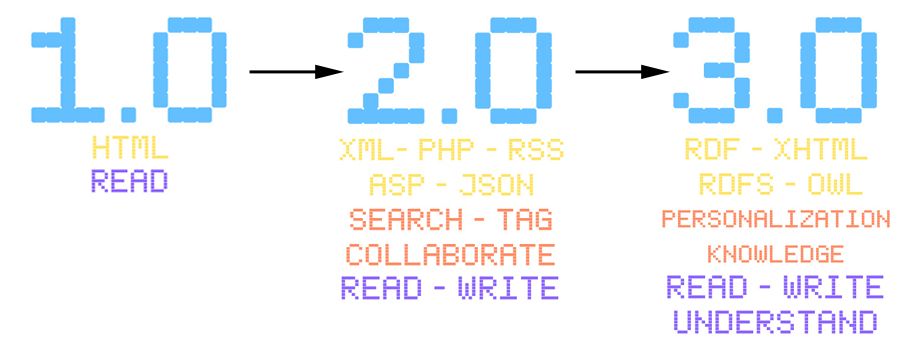
The progression of Web 1.0 to Web 2.0 to Web 3.0 all occurred in my lifetime as I was born in ’89.

1.0 to 3.0.jpg

Webevolve via Moreyne.com

“We used to look at the web as a place to “look stuff up” (1.0) vs. create/collaborate/connect (2.0)” – Alec Couros, on the evolution of the web.

As a child and as an educator…

I have evolved alongside it.

Used and abused it.

It began young, growing up alongside a techy, computer-loving father. Fast forward to grade six, when your search engine selection spoke volumes of your personality/popularity. I would use search engines to find tips and tricks on my favourite video games (like the original Pokemon Red, none of this augmented reality madness). Ask JeevesYahoo! (which, personally, is just used for fantasy sports now)… AOLAltaVistaHotBot (yes, it still works)… and the eventual winner: Google (get out of here Bing).

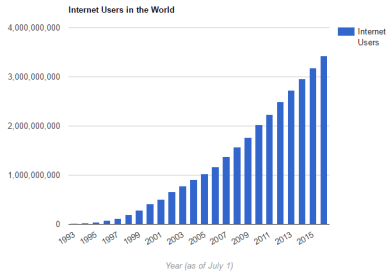
I lived with the doubters of the internet (I’m looking at you, mom). The rise of internet users rose like my height! (I would also argue my capacity for rational and logical thought grew as well, but that’s another debate)!

internet-users-in-the-world

Internet Users in the World via InternetLiveStats

And, alas, here we are. Progressed from the large encyclopedia that was the internet, full of content… to an organic, connected entity enabling critical thought and diversity of opinion on a monumental scale.

But what of its influence on me as an educator?

Living the amelioration of the internet likely leaves Logan largely linked and inclined to utilize Web 3.0 (more on that shortly, with a little less alliteration).

But what is Web 3.0Heutagogical learning (nice pronunciation in class, Kyle). Self-directed learning. We went from creating, connecting and collaborating (2.0) to letting these creations and connections direct our own learning (3.0). Could this make the teacher obsolete? What about the unmotivated learners? Does the direction a teacher provides mean everything?

Jackie Gerstein mentioned: “The Web, Internet, Social Media, and the evolving, emerging technologies have created a perfect storm or convergence of resources, tools, open and free information access.”

What does that mean for educators and students? What challenges are presented?

Digital citizenship. Whether is be educators through practice and professional development on the proper utilization of the internet or teaching our students to do the same, both are encompassed by what #DigCit entails. This can potentially widen wealth gaps as some students may not have equal access to internet and devices. But this does not diminish the necessity of education revolving around Web 3.0 as Luke Braun mentioned in this tweet to the question of its implications on the wealth gap:

Progress and learning to best meet the needs of your learners is always paramount, students with more exposure tend to be more successful and privileged. So with the ever-changing landscape of the web, versatility and lifelong development is your friend as an educator to provide opportunities for exposure.


Agree? Disagree? Thoughts?

Comment.

– Logan Petlak

Distance education: bringing the Mr. Petlak Classroom Experience Worldwide?

Tags

, , , ,

I have been travelling the #edtech world for several years, and here’s what I’ve seen:

However.

All the tools presented and proposed in this class are actually a bit overwhelming! There are so many options and yet what feels like so little time to experience all of them. The clock is ticking as I consider how to deliver content in my AP Biology course synchronously as soon as next school year for Prairie South Schools (and SunWest doesn’t offer this, yet! I’ll be a hot commodity). In our meeting October 25th, Jade Ballek mentioned that SunWest even offer classes to international locations such as China… how do they receive funding for this? Do they receive a tuition from Chinese students (what is listed is $500 on the website)? Do they charge more to international students?

Can I use this?

A colleague/friend of mine, Jeff Boulton, mentioned the potential of offering distance education privately. At $500/student, could I offer a Biology course to 10 students for $5000? And could I even have this class programmed asynchronously so it basically funds me once I complete my initial prep work? And if it’s asynchronous, with automated marking programs, couldn’t I manage well over 10 students?

Money? Interesting.It is here that we reach our quandary. Do we sell our educating soul?

chappelle cash gif.gif

Chappelle Swag via Giphy

I possess the ability to offer education to individuals worldwide and potentially receive money to do so. Should I? Would you? Based on my principles and beliefs related to open education and how learning should unfold, I should make my content and work free, which I have, but if I were to actively record instruction and create lessons to educate students worldwide, do I take a “small handout or reward”? Is it okay to?

It’s important to note that I believe that every individual deserves an education… so perhaps the solution lies in equity, with affordability to those who can’t and collection from those who can to promote my use and production values?

All these questions aside… can I even replicate the Logan Petlak Classroom Experience online? Is the educator I am on a screen the same as that face-to-face? I would argue probably no. Not without active discussion and interaction with students. That’s my favourite part of teaching, getting to work and talk with as well as read and respond to students… is that gone in the distance classroom – even with synchronous sessions (perhaps offered via Zoom)? And does this lend itself to more direct instruction? What about the socialization of being on campus and engaging with other students in the classroom? Many sources will tell you that a cons to distance education is a lack of “student to teacher face time” and “no social interaction”.

Solution?

Digital citizenship: fostering a digital presence and creating a networked learning community. And from that networked learning community, perhaps presents opportunities to collaborate with professionals from around the world to invite to contribute to class sessions (Adam reminded me of this idea with Skype).

This stuff you’re teaching Alec is starting to take shape more and more, day by day!

What are your thoughts? Does distance education present an opportunity for us as educators to earn beyond our negotiated salary? Do we as educators have a moral obligation to simply provide instruction to all and do this in the most cost-effective way possible?

– Logan Petlak

Stop villainizing the internet.

productivity

Productivity by Sean MacEntee via Flickr

“Is the Internet really a productivity tool or merely an endless series of distractions?  Has the Internet created a world of ‘multitaskers’ who don’t accomplish as much as they could have without it?”

Internet enhances productivity and connectivity.

Pound for pound, we are exposed to more information and ideas than any point in human history. The internet and wireless connectivity is to thank for this. Can it be overwhelming? Undoubtedly. Does it pose the potential of distraction? Certainly. But this glass half-empty nonsense fails to appreciate the depth of opportunity that the internet provides us with. Ultimately, it has the power to increase productivity. It makes us capable of accumulating a greater knowledge-base, organizing that content, requiring us to think critically about said knowledge-base, and network with others on the topic, be it independently (through MOOCs) or in the school setting.

How we as educators utilize this?

I love PowerPoint. While some evidence may dictate that PowerPoint in excess isn’t successful, I would question the parameters of the testing. I use PowerPoint as a organizational visual for a wide variety of instructional strategies. It can describe to students how to do a reading strategy for an article, it can incorporate pictures into content, build foundations for Screencasting or flipped classrooms as well as provide steps for group or lab work. I can ask meaningful questions to the class but cater to the learner who might understand it better by reading the question… or collect and organize information from students and provide copies to those that have missed. The program, and others like it, all serve this purpose and, when used appropriately and alongside YouTube and search engines, enhance instruction and outcome achievement in students.

In a Science 9 classroom, I have the opportunity to feed inquiry and answer the questions of my students right before their eyes. I don’t simply provide an answer, but also show them how learning can grow and extend into new learning as I ask new questions to allow the pursuit of knowledge to grow. And I keep the tabs open to show how we went from one idea to the next. Ex. Mitosis -important parts of what’s copied?-> Nucleus -contains information, as what?-> DNA – there’s something similar to DNA?-> RNA – what has RNA in it?-> Viruses -Example of virus?-> E. Bola –> can E. Bola affect us in SK?

That is what students learn in a classroom with PowerPoint and a visual of how their instructor utilizes the internet and wireless connectivity to learn… and it models proper use of devices that extend this learning to anywhere they are… or communication with experts, opinions and facts from around the world.

A friend shared this video on Facebook the other day (Holly shared a post about the School System by the same individual, Prince Ea), and the pro-tech and social media-using individual in me actually got rattled by the assumptions in this video. Prince Ea is very poetic and engaging individual but I feel his take on this is very much the negative side of the range of connectedness we have today. Literacy rates have increased substantially since the advent of increased global connectedness in the past fifty years, and while I believe he may feel we are more distracted, I would be inclined to disagree.

Reminded me of our discussion regarding how we commonly villainize changes, presentation media, the internet and we may fail to appreciate the “new normal” or “changing humanity”. Any thoughts? Are we really more disconnected now than ever or do our devices help us connect even better now than ever before?

– Logan Petlak

Educational software is changing for us, and us for it.

Tags

, , , , , , ,

Snapchat-Based Reflection

Educational Software & Media
Snapchat – Not a conventional educational app – but in terms of responsible use of media and digital citizenship.

Perception vs reality and impacts on education:
Perception – it is a distraction in school OR it is an amazing way to connect with friends and others. Life is more disconnected than ever: Prince Ea: Can we auto-correct humanity
Reality – it IS a distraction BUT it is an incredible opportunity to enhance connectedness between students. I would argue students are better connected now than ever – we can share and observe others lives together. (Connect to Distance Ed) later.

Proponents, opponents, and adopters of these technologies:
If you’re against it, you do not enjoy the distraction of it in classes.
If you adopt it, you’re using it to connect with students.

Effects positive and negative on teaching and learning:
Positive – warm and energetic atmosphere.
Negative – can decrease engagement if not patrolled.

Pedagogical advantages and disadvantages:
Advantage – it keeps us fresh on what is a large part of many of our children’s development.

Disadvantage – it can be a vehicle for abuse, harassment, and as previously mentioned a distraction.

Conclusion
Education is always key – rather than fear and taking things away because we aren’t familiar or can’t control them… educate yourself and others on its use so that you can help them use it responsibly. I’ve observed the use of Kahoot and it seems positive, while the energy that is created as a result may have some short-term management implications a distraction, like Snapchat… and it may not meet the needs of ALL learners – it engages many of them.

Tell me you aren’t feeling more connected to me because of the adorable kittens.


Reflecting on educational software and media in general

Educational software is constantly evolving so as assessment and teaching practices change and become more inclusive of all learners, so too will the educational media to accommodate the demands of educators.

However.

Snapchat is NOT a conventional educational media/software. But it is a form of media that requires education. And the learning inherent within the roots of Snapchat (connecting with others over distances) has positive implications. When we look at the opportunities presented by distance education, the term “disruptive change” rears its head, almost as terrifying as “transformational change”. While sounding negative, disruptive change can be an encouraging as it may disrupt the normal constraints of the four-walled classroom. Personally, I get an opportunity to offer a course through distance education in our division next school year and this presents a lot of challenges and potential. This extends to many educational technologies, but most importantly, in my eyes, is that it poses opportunities for learning that are not limited to classroom walls.

That being said, there are inherent values imposed by new apps that are created, like Snapchat: “why do you need to take pictures of everything you do”? Once again: opportunity. Chance at critical thinking when engaging in online media. A favourite sarcastic quote in my classroom is: “the internet said so, so it must be true”. Which is an encouraging comment… but we see the two-headed dragon of this being that fact (peer-reviewed articles) can be misinterpreted as potentially inaccurate and that only your interpretation and beliefs of the content are much more plausible. It’s okay to synthesize an opinion from various forms of content, but what happens when what is most likely right is taken with too much doubt or discounted as not credible because other sources aren’t?

Educational software and will continue to evolve to meet our needs. As professionals it is paramount we stay up to speed on new means to meet the needs of new learners: changing ourselves to better utilize programs which continue to evolve alongside our evolving educational selves.

Agree or disagree?

Comment.

Logan Petlak


The digital life of a teacher-entertainer.

Tags

, , , , , , ,

In this ever-evolving  understanding of teaching and learning, educators are constantly on the run from “traditional schooling”, constantly bombarded with news mean to fight the factory education model they are still enclosed within. Teachers, forever exposed to new means of instruction, the new rights, the new wrongs, the new device, and in the case of Sesame Street: the new songs.

Sesame Street Songs (Then and now)

Songs?

In a classroom?

Not allowed.

Unless your students are part of a generation with higher cases of ADD needing various forms of engagement to aid in learning (In this writer’s opinion, higher cases of ADD are strictly due to larger and more accurate amounts of testing).

Oh!

Wait!

Our students are a part of this generation. They need interesting and engaging delivery of content to enhance learning. Not to say it hasn’t been present before, I just think the world is far more engaging than it ever was. Which is why we, as educa-entertain-tors have to compete with the shows we were raised on and then some. New types of entertainment change comes with our handheld devices and while individual perception of change varies, some welcome it, some resist it, the fact is media, television, and devices are always changing. Therefore, to stay competitive, we have to stay on top of our game. Sift through the resistance to BYOD, get your hands on some additional devices for those who don’t have them, and get on the same level as every other source of entertainment your student is exposed to. I don’t mean to discount evidence that indicates BYOD can be bad for learning , but much like shows of the past, learning can still be had from devices and programming, because we watched these shows.

pinky__the_brain_wallpaper

A personal favourite of mine from youth. “Pinky and the Brain” via Looney Tunes Wikia

Even if standard achievement scores went down, there is learning that occurs beyond the ways we measure it. Natalie’s take  on the work of Neil Postman reminded us that: “He indicates that Sesame Street is a series of short commercials meant to entertain that uses puppets, celebrities and catchy tunes.  This is true.”

But why isn’t entertainment considered learning?

Kids don’t always learn the way we want them to, but there still are provided with ways to learn through the apps, social media, and games they play. Apps allow our students to connect with each other, face to face. Apps are reinventing the depth of relationships we may have had before with increased exposure to socialization and different experiences and cultures. Many games are problem-based, objective-completing activities that provide descriptors and feedback on their work. Consistent with that of the classroom but not with the content we would prefer. But can it go wrong? We can observe the history of the learning channel and see the defamation of the “educational program” over the years, and Krista Gates mentions that the shows are not as educational as they once were. But they are just as entertaining, and when I enjoyed the learning that I was exposed to on television, I enjoyed learning.

Sounds like a connection.


Television, apps, and devices are fun.

Television, apps, and devices are entertaining.

Television, apps, and devices are engaging.

Engagement leads to learning.

Learning should be engaging.

Learning should be entertaining.

Learning is fun.


Thoughts? Disagree? Am I simply brainwashed by the collection of television I’ve been exposed to over the years? Is my naive optimism the product of every show I’ve ever seen where a cartoon character made a joke or managed to smile in a bad situation? I’d like to this so.

Logan Petlak

Learning as a chaotic, evolving mosaic.

Tags

, , , , , , , , , , ,

Which learning theory is right?

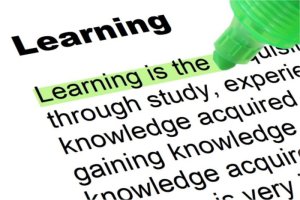
learning

“learning” via BlueDiamondGallery

Ashley Murray nailed it: “As teachers I think that it’s important that we avoid getting caught up in which theory is the BEST theory to use.”

Taking a page out of John Dewey‘s playbook, I feel the need to ‘link sciences’. What is my take on learning theory?  Learning as a chaotic, evolving mosaic. I use mosaic in the biological sense, when separate genetics are present together. Substitute genetics for learning theories, and away we go.

Much like evolution as a “theory”, they don’t become theory without reputable and verifiable strategies, experiments, and support. Since so many streams of learning theory hold weight, combining them and treating learning as an evolving and changing process. Let’s allow learning to proceed as a complex science including constructivism, behaviourism, cognitivism, and every other learning theory.

Ultimately, as educators, when we consider our philosophies it comes down to the first two questions Schunk (Learning theories: an educational perspective, 1991) asked:

  1. How does learning occur?
  2. What factors influence learning?

Learning occurs through connecting with others who may have different ideas and perspectives than us, through the chaos of diversity. We associate and establish similarities and differences between what we know and seek to learn. We conceptualize and translate texts, tones, and visuals. Everything we learn, builds to the next lesson. Every experience we’ve had, problems we solve, memories we retain, every innate ability and predisposition we have influences how we learn. Reinforcement and punishment influence our perception of how we view it, but even that knowledge and learning is organic and evolves as we reflect. We independently yet dependently learn holistically (physically, socio-emotionally, mentally) and it manifests itself in our society as a mosaic. This particular quote resonated with me and diversity and complexity of learning: “Which theory [or theories] is the most effective in fostering mastery of specific tasks by specific learners?” Adjust and adapt. To lock yourself into one belief of learning theory and deny others seems counter-intuitive, or think it is something clean and linear (like a pyramid). Humanity learns.

Ideally, that’s what my classroom would look like. Does it look like that every day? Maybe not upon initial viewing, but it’s rooted in what I do. And it’s constantly changing.

you-gone-learn-today

via Giphy

Do you agree that learning is hard to classify? It’s worth looking at all the different beliefs on learning. Some may have more evidence than others, but as a connectivist would tell you, even the opinions we don’t agree with have relevance and meaning to learning.

– Logan Petlak, lifelong learner.

Can’t fight the #EdTech juggernaut.

Tags

,

What is #EdTech?

I’ve asked this before. I went into a spiel about how technology isn’t easy to define asking, “do we sometimes mistakenly assume it has to be an object”? After pursuing learning related to EdTech in this past year, I think it is fair to view it simply that way. A modern definition of educational technology to me strictly addresses: the objects, apps, and tools created in order to aid in learning. EdTech is just learning, past and present.

BUT!

When one thinks of EdTech, one thinks of <insert device here>. SMART Boards, iPads, BYOD classrooms, take your pick. Mainstream EdTech is devoid of the history or philosophy, it is simply a “thing”.

And shout out to Holly, she nailed it with this definition:
“it is a set of tools that aim to enrich and enhance the teaching and learning experience.

To continue with completely overgeneralizing, education technologists (EdTech users) know the historical influence and implications of what goes into education technology anyway (the ideas and processes), so while an official designation of what EdTech is may contain the thoughts of its foundation, the majority view it simply. The critics and opposition to EdTech as a may point to the tech trade-off as a Faustian bargain, but that argument can be said of any step for progress/change and to me has all the symptoms of pessimism (the “p” word). “This new energy source will create new jobs”, “yes but it will ruin or make old jobs obsolete”, cut it out.
//giphy.com/embed/Np917mP5ixJJK

via GIPHY

It’s awful to displace people who may have worked at something for a long time, yes, but it illustrates our need to be able to adapt. Potentially, some companies are imposing values and beliefs on our youth with what tech they create, but it some cases, believe it or not, these things are created with the genuine intent to make life better (some capitalize on this, unfortunately). Haters might come at me with: “these technologies aren’t distributed evenly though, this increases the wealth gap as the haves get the best gear”. True, it does, but it also helps teach digital literacy to those with minimal exposure to it at home, assuming your educational institution can facilitate it.

Resistance is futile.

But worth it.

From oral to written to computer to social media, learning and EdTech has taken on different shapes throughout history. Fact. However, doubt is an integral part to each innovations’ growth and consequently seeks to further learning. The game is constantly changing for humanity. It doesn’t make us all-powerful when we are the architects of these paradigm shifts, but agents of change. These agents may hold and manipulate power and the very flow of human socialization, but it is negligent to not acknowledge what works (and what doesn’t).

Why do I think about it this way? It stems back to worldviews and a growth mindset. Approaching problems, be it with self or with others with a solution in mind; positivity in making the most of what’s available is not only better for me, but better for my students. So I continue to embrace change in education as a whole, not simply limited to the scope of EdTech, whether or not all of its depth is actually taken into consideration by the masses.

By the way, how great are gifs? And how fitting is this to the theme of my ramblings today?
//giphy.com/embed/l0mAEe524JfsA

via GIPHY


Agree? Is this all there is to EdTech and life?

Disagree? I’m too optimistic and need to be more realistic of the perils?

Comment.

– Logan Petlak


Philosophy of the scientific method

Tags

, ,

A lot of students ask me (not actually): “Hey Mr. Petlak, why do you think the scientific method is so great?” and I say to them: “Because.” and they say: “Because, why?” and then I say: “Exactly.”

“Why?”

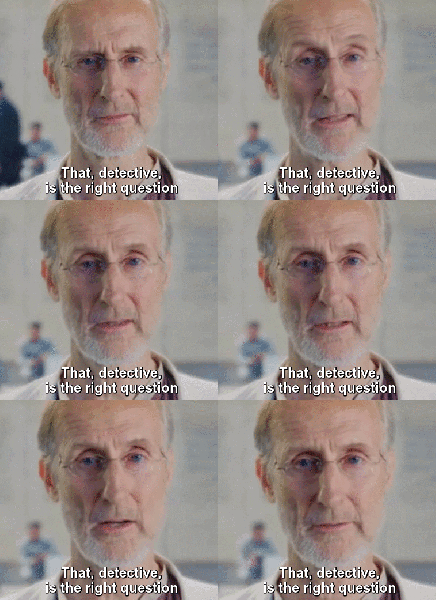
that-is-the-right-question

I, Robot by grogbor via imgur

The question is at the root of science and learning. Keep asking questions, and keep asking the right questions. Serendipitous discoveries don’t happen without the right question about an observation.

Why is the sky blue?

How does the moon affect tides?

The scientific method answered these questions. Through data and experimentation, individuals explained what it wasn’t, and accumulated data that explained what it was.

However…

My first three and a half years of teaching are in the books and I’ve been startled at how the scientific method is easily forgotten or left unappreciated. And some things may not be simplified/explained using this method – like teaching… yet. The scientific method may seem like another thing to memorize in class, but for myself it is a way of approaching life: Every problem or observation has an explanation or solution… or if the solution doesn’t solve it yet, we learn something that it doesn’t solve it. Is this a new philosophical idea? When did this way of thinking originate?

The Scientific Method as an Ongoing Process.svg
By ArchonMagnusOwn work, CC BY-SA 4.0, https://commons.wikimedia.org/w/index.php?curid=42164616


First introduced by a man named Alhazen in the 10th-11th century, he stressed the importance of meaningful data collection. While individuals may have thought this way prior to this, he is credited with it. I personally don’t always place a strong emphasis on historical figures as I find that we tend to glorify and paint individuals with a perfect history. In this case, the fact that this way of thinking has been around so long is important to take note of. Why? This means of thinking transcends time and provides us with a common language and means to approaching problems/questions about our world. And it is without a need for faith or belief, because you can observe it work. It isn’t opinion, its free from bias.And it existed in times where faith and belief may have been mandatory.

People abuse what it tells us and asks for their own gain, unfortunately. So education is required on the nature of science – it is simply the pursuit of truth. Hard truths are inherent within the process. We learn the most from answering the hard questions and challenging the unanswerable questions… yet the opportunity for good and evil “for the sake of science” presents the duality of its nature.

people_like_what_science_gives_them

“People like…” via reading-skeptics.org

Science, at its roots, is laced with a natural idealism and altruistic intentions, yet the beauty of it is that it is devoid of both. You can love and hate what you learn, but science is free from love and hate. And that simple complexity is what makes it such an important part of pursuing life – humanity and organisms constantly address problems and come up with a means to fix and explain them… what we do with the solutions are up to us.

Problem?
Why is there is problem?
Possible explanation to fix the problem.
Try explanation.
Failure?
New explanation to fix the problem.


Always keep questioning and solving problems… so if you have any questions, comment below!

Logan Petlak