My critical, digital life.

Tags

, , ,

My critical, digital life.

I normally wake up and go on some form of social media (either Facebook or Instagram), and probably log a minimum of two hours on it per day. Side note: This, like many other people, is normally how I get my news.

I check sports highlights (Crosby, wow), 
friends’ activities and scroll through my feeds with the multitude of posts that people in my social network share parceled with advertisements specifically catered to my search histories and demographics I fill.

As I scroll through each post, I’m analyzing content consciously and unconsciously. Someone shares a politically-charged post about the latest Trump or Trudeau controversy, someone shares a post about the legalization of marijuana, or someone tags me (and it’s usually my fiancé) in a funny cat video or meme.

All the while there I am, looking at my electronically-powered, 5.1-inch screen of my phone, consuming and questioning in some combination, if not all, of the following (reflective of my video on Fake News):

  • Is this post valid or accurate? (Is it making claims that just aren’t true or promote opinion as fact?)
  • Why did they share that? (Was it funny? Intentionally offensive? For others’ benefit?)
  • Would I ever share that? (Yes? No? Did I ever? Why would/wouldn’t I now?)
  • What caused them to think that way? (What is causing me to think this way about it?)
  • Do they see how biased the source and article is? (Do they even care about that?)
  • Did they look into that claim before sharing? (Will I bother to look into it?)
  • Do they know that has no validity to it? (Do I actually know enough about this topic to provide validity?)
  • Why do I think that’s funny? (Is it something I agree with? Am I right in laughing about it?)
  • Why do I find that inappropriate? (Am I right in thinking so?)
  • Should I say anything about this? (Why should/would I?)
  • What do I do about this post?

After some combination of these thoughts and questions go through my head, it becomes a decision based on the final underlined questions. What do I do about this post? Like, share, comment, or ignore? Even more simplified, it’s ultimately one of two thoughts:

1. I’ll just scroll past.

OR

2. I can’t just scroll past this.

In the event I select option 2., a series of follow-up considerations will occur depending on the content of the piece, for the sake of this post – our exemplar content can be any of the following, all legitimate posts from people in my social network, several of which I felt “I can’t just scroll past this… I have to comment”:

Exhibit A and Exhibit B

Exhibit C

Does it convey “fake news”, and what specifically about this post is “fake news”? Does it misinform people and who are the people who can see it? What message does it send? What about it specifically do I feel compelled to discuss?

And the big question, if one of my students shared this, would I address it and how would I address it if this was the case? Address it that way, because we are all learners:

  • Respect, be positive towards the individual and have empathy for the individual – treating them as a learner.
  • Find common ground on this topic.
  • Address the specific issue of the content of the post.
  • Avoid getting emotional in your response or in reading theirs.

After making a post/comment, follow-up reflective questions surface:

Do I like what I posted? Could I have done better? Did I word it right? Will they understand what I’m trying to say? Will they listen to me? What if they don’t? Is it pointless to comment, then? What about the people who don’t comment, don’t like, but see it and consume it but leave no visible trace of acknowledgement for me? Am I doing a service to them?

My comments have been met with likes and dislikes.

Sometimes I’ve received insults. Other times the original person who shared the post doesn’t comment or their comment is strictly defensive and not open to what I have to say (maybe the way I wrote it was offensive?).
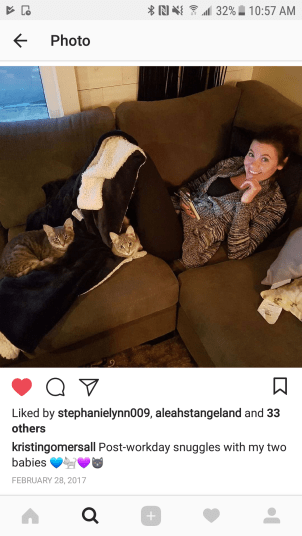
Kristin and Cats Instagram

This is what daily social media consumption looks like for me in the worst-case scenario. Best-case scenario, I see pictures like this (my fiancé and two of our cats).

But best-case or worst-case, all scenarios are part of the deal.

How do you consume online?

Have you found yourself exposed to similar posts on your social media feed? What did or do you do?

Comment and let me know!

– Logan Petlak
Can we ever be “fully literate” in all dimensions of literacy?

Tags

, , , , ,

Am I “fully literate”?

Is anyone?

As evidenced on my page, I believe we are all lifelong learners, so is it even a fair question to consider the notion that there exists a specific point in literacy that we officially “hit” and are considered “fully literate”?

Probably not, the idea of literacy seems too subjective.

Indicators exist in certain subject-areas that would serve as evidence to infer literacy-attainment, so in that sense we can create benchmarks for literacy. But when considering the ever-shifting development of subjects and or expanding knowledge on learning, benchmarks today may shift tomorrow. What is the next benchmark or desired milestone associated with grades and subjects?

Being literate today is a tall order (inadvertently implying that it was necessarily any easier at different points in history). I feel like becoming fully literate today has become synonymous with wisdom, utilitarianism and benevolence (or maybe that’s just my view on it). But you’d think the wise would know that you can never be fully literate (this is me thinking that I’m wise).

Literacy seems almost synonymous with learning (you have to learn to be literate). If you’re capable of continuous learning, consuming information, and improving in all dimensions of literacy (or perceived important ones of today), with certain benchmarks, maybe that’s the way!

BUT WHAT ABOUT PEOPLE WITH BARRIERS TO LEARNING AND INFORMATION CONSUMPTION?! IS THE SAME BENCHMARK OF “FULL LITERACY” STILL A SPECIFIC GOAL DESIRED?! HOW DOES “FULL LITERACY” APPLY THEN?!

science 10 scientific literacy.jpg

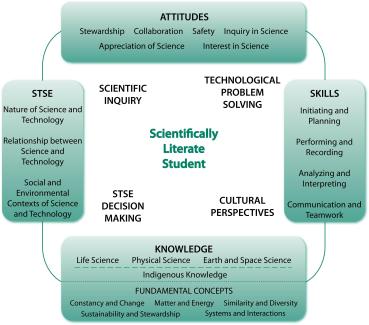
A Scientifically Literate Student via SK Curriculum

This brings me back to my post about media literacy and, as Carter also said in his vlog, it is needed. And to me, social and media literacy almost seems to transcend specific subject literacies. But then I think of how important scientific literacy is and how passionate I am about it (so much so that I’m making a resource for it an media literacy) – and how that, too, is needed for citizens today. Yet it needs to be delivered in a non-Eurocentric way which requires some cultural literacy.

Aside: these are great considerations for the development of my science resource.

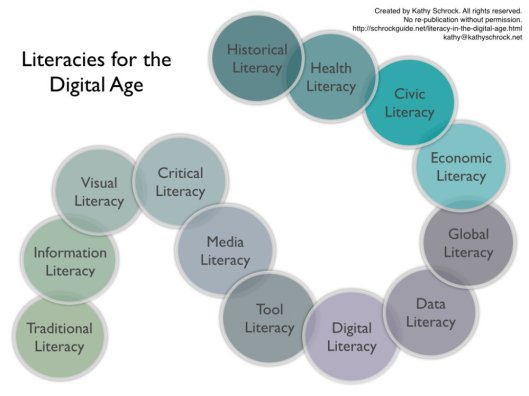
The considerations are making my head spin, though. We probably need some form of benchmark to provide students with skills to become “fully literate” in today’s society, yet don’t want to be so specific that it becomes constrictive or culturally-uniform (devoid of diversity). The reality is that there are many different forms of literacy that I haven’t listed yet that are important to the holistic growth of individuals (health and physical literacy, for example) and all need to be pursued when able. Especially when all of these forms of literacy depend on one another as an intricate web enhancing the impact of another.

digital_literacy_newest_copy.001.jpg

Literacies for the Digital Age via Educorp

If all forms of literacy are continuously pursued, beyond the benchmarks, we become the benevolent, wise, and “fully” (but not really, “fully”) literate. As educators we have to be pursuing this personally, regardless of the courses/subjects we instruct, to model this for our students as well.

Agree? Disagree?

Get at me!
– Logan Petlak


The Need for Media Literacy

Tags

, , , ,

Media literacy is an integral part of learning.

Image result for media literacy

Global Competencies via AML

Many of the “to do’s” of media literacy, as evidenced in vlog posts by Dani and Luke are pretty straightforward and may occur in courses anyway without the deliberate classification as media literacy. Literacy in senior English includes media literacy in dissecting all elements of literature including the writer and content of the piece. History courses analyze the context in which historical events occurred much like we would analyze all the factors surrounding articles and posts.

I think that it is a very easy-to-realize goal of extending media literacy (specifically in the digital realm) into many, if not all, subject-based classrooms. It seems like it would be the most relevant learning for students as well (at least in the environment in which I instruct, high school), which should increase engagement. I would hope that this is a trend that more and more educators seek to address in their classrooms, but how would I ever know that its occurring when I’m busy teaching? Prep time rarely gets used to observe other educators as many of us re trying to keep our head above water working on marking/prepping. This presents the necessity for it to be required/enforced at an administrative or divisional level. And this presents the question then: does every teacher need to do it then? Is it a part of teacher assessment and professional growth for us all as a profession? I’m biased, obviously, but I think it should be! Do you agree?

With this in mind, what currently is happening in my school regarding media literacy? How are we educating students about digital citizenship and media literacy?

ccicyclonenation

Screenshot of ccicyclonenation post on Instagram.

At Central Collegiate we have been fortunate that administration encourages opportunities for sharing and leadership as educators supporting one another with educational technology. In addition, individual teachers are encouraged to take “risks” and utilize social media as a means to build community at Central Collegiate.

Our school social media, differs from that of each of our educator’s social media posts, as its very much about the school, not personal (obviously). With different types of sharing occurring with each of us teachers, I think that diversity in types of sharing is reflective of the diversity present in schools and also illustrate that necessity for instruction and unpacking of the idea of media literacy for everyone (this extends to include other roles within the school including facilities, office/administrative positions, and support staff), does this become mandatory and assessed in the same way it occurs for educators?

It’s still kind of a grey area when considering personal media use as evidenced by our ECI 832 discussion with Patrick Maze. There are some obvious things to avoid, and there are some things that perhaps shouldn’t be posted, but are arguably okay depending on perspectives. This raises that learning and modelling digital responsibility (and ultimately, media literacy) as individuals working with students and youth. Would we be okay with a student sharing something like what we post? Are selfies okay? And is that wide range of subjectivity regarding “what’s okay” a good means to go forward, rather than a definitive line?

I’m not sure on these questions regarding the future of media literacy, but it is a big part of society and culture today that we all need to be educated on.

Digital Identity: Past, Present, Future

Tags

,

In an effort to better understand (and educate for) digital citizenship, I am going to reflect on my personal journey through digital citizenship in my past, present, and future.

Logan Petlak’s Digital Identity Past
A.K.A why Facebook Memories makes me shake my head [smh] at myself daily.

Digital identity and footprints weren’t a thing until social spaces became prevalent like Myspace, which was prefaced by MSN Messenger. I made my names and statuses either song lyrics that I thought were cool or that people would like (“I got soul, but I’m not a soldier”) or put hearts around elementary school girlfriend’s names “<3 Michelle <3”, or both! I liked bands and people on Myspace that I thought my peers would be impressed that I liked, and adjusted half-mockingly, half-seriously, my top five friends on Myspace. But this identity, at least to the best of my ability to find it, no longer exists.

Facebook had emerged in high school, and there began posts begging for attention and acknowledgement. Some funny, some needlessly oversharing (given my definition of oversharing now).
Facebook “on this day” serves as a constant reminder of this, to which I have been pressing delete to try to minimize the non-digitally-citizened presence of Logan Petlak, despite the positive learning experience I bet it could be.

1933759_21154210720_8433_n

Facebook Profile Picture (17 years of age) – April 13th, 2007

I had hoped to find pictures on Google Images that would help should my youth and digital footprint from long ago, but I was unable to find anything prior to my teaching career – I considered that a positive!
Here’s my first Facebook Profile Pic though!

Over the course of several years, as I went through my undergraduate studies at the University of Regina, I continued to experiment with sharing online in what I considered my “private” world of Facebook. There was a progression in the content I shared over time. There were less pictures at social gatherings and less posts asking “what everyone was up to tonight”. They progressively become fewer and fewer as my teacher education grew and grew.

This progression brings up questions though, what caused the shift? Was it brief forms of digital citizenship occurring in my courses? Was it settling into a long-term relationship? Was it simply exiting my early-twenties and maturing? Or a combination thereof?
Petlak’s Digital Identity’s Present
A.K.A Educating students on digital citizenship and their digital identity.

21167826_10159220590955721_2756138944051037780_o.jpg

Present-Day Logan with Fiance, Kristin

Present-day. I’ve found success in not getting too full of myself as an educator. The reality is that with the multitude of experiences and perspectives sitting in every one of my classrooms, my experiences are so specific and limited, it’s really not logical to assume I know more than any student in any particular subject, especially social media and the social dynamics therein that influence their relationships with one another. This translates to how I approach digital citizenship in my classes. I believe I possess the humility required in “recognising and respecting the knowledge students already possess about these media”. The reality is, I possess a fair amount of experience with social media and its inherent effects on identity as it played a role in shaping mine in my teenage years, especially when compared to other educators belonging to different generations. But it would be presumptuous to think I know more than my students. The idea of being a facilitator of discussions about digital citizenship hopefully allows students to consider their digital roles, identity, and footprint better than I did at their age. As with much of the learning in my classes, it revolves around questioning.

But will it look the same in the future? I don’t specifically assess how they interact online – definitely not summatively at least, but they have to critique/cite sources. They question bias of sites. Maybe my document will allow me (and others) to more formally assess digital citizenship learning in my science courses.
Petlak’s Digital Identity Future
A.K.A what will my digital identity become, do I or don’t I comment on “Fake News” or blatantly-biased and inaccurate posts on social media by my peers?

In class, we did some cyber-sleuthing to see what we could dig up on some individuals and their digital footprints. Naturally, I felt the need to revisit my footprint.

And?

My present identity seems positive: my website, tweets, work with the division’s Gay-Straight Alliance, and hockey stats. Good for you, Logan!

But how will it look in the future? And what is and what will my digital identity look like through the lens of my friends/followers whom I rarely see in person anymore but still follow their lives on social media?

As an educator, do I stay true to my trade and try to educate in my social circles as well? If I call out “fake news” to my friends in the future, do I become too preachy in their eyes? Does their perception of me matter if I’m promoting what I am required to as an educator and representing my profession “well”?

What about if I have kids someday!? How will I educate them? Will I share photos of them while they’re young so that they actually have a digital identity before they’re even capable of deciding their own?

I very much agree with Krista and Kelsie’s phrase of digital citizenship being a “patchwork process”. My journey is evidence, albeit subjective, of how digital citizenship education can’t be precisely defined, but I really think speaks to the incredible scope of education and learning that can occur when the digital realm is responsibly utilized (or even the learning that can occur when it is irresponsibly utilized).

There’s always questions!

Logan Petlak

Developing a high school science digital citizenship resource

Tags

, , , ,

In my first post, I highlighted my desire to create a resource for digital literacy, I clashed with making a series of vlogs to educate my peers or making a document to assist science educators in delivering digital literacy in their science classrooms that corresponded with the curriculum. I decided to pursue the latter as I feel it may be a more realistic venture with the resources I have available to me (I reflected on my previous attempts to make a video series in the distance learning course I took, and concluded that it takes a lot of resources and time for only one person to put together – not that this won’t also take time, the resources may be less).

In my brainstorming for this assignment I had many ideas come to mind when considering the philosophy and approach that educators should have when implementing a document associated with digital citizenship in a high school science course. Some of my initial considerations to include in the completed document were:

  • Considerations of applicability to general Saskatchewan curriculum focuses like broad areas of learning, specifically how science and digital citizenship coincide to promote lifelong learning, engaged citizens, and a sense of self and community. The same can be said of cross-curricular competencies in science like thinking, literacies, identity, and social responsibility.
  • The creation of digital citizenship resources associated with different senior science courses (including learning outcomes) – ideally in an area where many can access this information and try to make it applicable for curriculum across Canada. This would likely begin with courses I am familiar with: Environmental Science 20, Health Science 20, and Biology 30.
  • Overlap between digital citizenship pieces and an “effective science education program” including attitudes, skills, knowledge and STSE. Ultimately using scientific literacy for digital citizenship, or digital citizenship as a form of scientific literacy. Informed through some guidance associated with 21st century learning.

    Scientific Literacy Framework

    Scientific Literacy Framework via screenshot of Saskatchewan Curriculum

  • Guidelines to equip educators to model online behaviours for students, specifically centered around Ribble’s nine elements of digital citizenship (dominantly on accesscommunication and literacy – more below). These guidelines would try to provide suggestions to approaches while bearing in mind the diversity of educators existing on a spectrum of digital visitors and residents. The suggestions would be rooted in delivery of digital citizenship through the lens of Respect, Educate and Protect – as all are essential to “ideal” digital consumption.

Access (allowing for access) – as part of a pre-read to the document, or philosophy to approach the guide with, there will a piece for educators on access and attempting to overcome barriers to students’ device-usage, including information that they may want to share with parents regarding the benefits of having their students exposed to and participating in the usage of devices/the online world. I thought this was innovative, then I saw Alec and Katia had included this in their DC Guide, through BYOD practices.

Communication/etiquette/rights and responsibilities – establishing an emphasis on productive communication in text-format existing through social media and other forms of digital writing. This would provide education on being hyper-aware of the implications of word-choice, phrasing, and delivery of ideas.

Literacy – critical analysis of “scientific articles” as well as the utilization of digital technology to enhance understandings and concepts in science as an industry through forms of content curation.


As I begin to put this document together the main ideas should act as a framework to begin approaching organizing these ideas together. The reality is the landscape of the digital realm is constantly shifting so it needs to be designed with adaptability in mind as well as inclusive to the variety of learners and educators interpreting the material.

Any feedback or things you feel are necessary to be included in a high school science digital citizenship document, please share!

– Logan Petlak


Additional considerations:

In my other class I am currently taking, ECI 842, we recently discussed the overlap between Indigenous Science and “Western” science and would consider trying to have a sub-document that provided strategies or suggestions for implementing Indigenous ways of knowing in the classroom effectively while coinciding with digital citizenship as an extension of real experiences, diverse worldviews, community and its practices, and the digital realms’ relationship to land and ecosystems. This would include the idea of identity and the digital identity also simply being a part of our greater identity, as Paul Brown mentioned, and not something that is meant to be separate.

Transgenerational (Digital) Citizenship Education

Tags

, , , , ,

“Digital Citizenship is more than just a curriculum to be taught in a classroom; it is an ongoing process to prepare youth for a society immersed in technology, personally and professionally.”  – Robyn D. Shulman

This quote prompted me to begin sifting through all of my old posts because it presented a revelation of its simplicity/goal. I’m shocked that I don’t recall ever making the connection that digital citizenship education is just modern citizenship education; “prepare(ing) youth for society”. How is my school preparing students for this?

When Shulman listed off digital skills that might be taught in schools: “coding, animation, web design, blogging, cyber-security and narrowing down information”, I feared our (my) school only was hitting a couple at best, but it does hit these skills. Unfortunately it’s not with a specific consistently or continuity from course-to-course (it’s teacher-preference, or subject-specific with a heavy emphasis on computer science courses).

service guarentees citizenship.jpg

“Service guarantees citizenship” via MemeCrunch

But when broadening the definition to citizenship education that can have digital elements to it, the service learning and other citizenship education that occurs cross-curricularly in the school should promote similar values and skills when approaching the online realm. When considering the “ongoing process” piece Shulman mentioned – perhaps this represents the short-term educational change required to include digital citizenship? But how does one “monitor” or “manage” the learning that occurs in classrooms when it is such a broad, instructor-specific topic to cover elements of digital citizenship? This is where this broadening definition of citizenship also helps in the transition to digital citizenship education in some courses. Shifting the mindset on the digital world comes to be an extension of reality rather than a dangerous, unforgiving world as some parents or students may be approaching it, especially when we observe differences in digital literacy from one generation to the next – previous documents can still be relevant and promote transgenerational (digital) citizenship education in schools and in the home.


When I read Sklar’s take on digital hygiene, I began considering the impact home has. Education about digital citizenship occurs in a variety of ways today, some would argue it needs to occur in the creation of a positive online presence. and a lack of specific digital citizenship occurring in schools when I was an adolescent in the infancy stages of social media. It makes me feel incredibly fortunate that my father was very much into technology and trying to stay up to speed on it – by extension this helped us at least stay relevant and on top of/familiar with most new tech emerging, and Sklar appears to have their kids in a similarly-privileged position – the students have access to positive models for guided exploration into digital citizenship, but not every student is so fortunate (as Jana mentioned), which dictates the necessity for digital citizenship to be a part of education. Fortunately, this end is partially realized given subject-based outcomes through that expansion of preexisting understandings of what citizenship is to be inclusive of the digital community.

digital-citizenship.jpg

Mia MacMeekin’s Digital Citizenship via TeachThought

Citizenship occurs through the emphasis of digital citizenship. The critical thinking that occurs in the active deconstruction of our interactions in the digital world is a transferable skill. When considering implementation of this at an education system level – adaptability is key (much like the organic curriculum I’ve mentioned before, Sklar mentioned a “living document editable by students”). It has to shift and evolve with the ever-shifting, ever-evolving landscape to adequately and relevantly prepare students and equip teachers.

This is merely a surface “solution” to approaching digital citizenship (there a some lovely tips on how to implement this to the right, by the way). What does the future have in store for education?

How will schools shift in time? Will we see an increasingly student-centered classroom? Do the number of teachers need to increase to meet a more wide variety of student learning needs as technology further allows learning to be more personalized? Or will classrooms even exist if more technology makes education more available? It’s a tough call, so much is dependent on the “babysitter” properties of school that I see a “educational revolution” deviating from the current educational model as unlikely in the future – but I would welcome being wrong, even it put me out of a job.

Thoughts?

Let me know!
– Logan Petlak

Digital Learners and Digital Wisdom in a Digital World

Tags

, , , , ,

I genuinely hold the idea that we can’t villainize the internet. Policing the students who (ab)use technology or criticizing the current contexts our students develop in seems fruitless in the absence of education. Maybe this lends itself to my appreciation for better understanding our respective places in the digital realm in order to proceed with wisdom? (It does). We really need to understand the depth of what we consume digitally (and how) and with this comes the need to identify where we, and our learners, fit in order to grow  and continuously learn about the ever-changing digital landscape.

Ironically, in previous reflections, I’ve kind of grappled with the idea of classifying students and myself with particular labels. At times labeling can be too constrictive, or its too subjective when considering things in a spectrum (but, that’s the point of a spectrum); student (and teacher) experiences and narratives constantly are in flux, so a spectrum to approach the diversity of technological literacy makes sense. The variation is wide from person-person. In this case, “what type of digital user am I”, widely varies depending on which point in my life you look at (my age, and technology available at the time), or in what setting the notion is applied (is it me as a student, teacher, or consumer). In my late teens?

I overshared and would’ve immensely benefited from digital citizenship education
(thanks Facebook Memories, for serving as a daily reminder for how much of a tool I was). The appreciation for the variety of digital consumers I think should keep us humble and empathetic as digital educators (if you’re an educator, your students will be put in a better position to be successful if you acknowledge your need to be a digital educator, assuming you live in a context with access).

This appreciation for empathy when approaching the idea of the spectrum of digital consumers has been a scaffolding process. One of my colleagues was providing a presentation to our staff about English Language Learners, and stated that we are all English Language Learners. That really resonated with me when considering the wide variety of proficiencies that exist regarding our respective grasp of the English language would also apply to the range of our grasps of digital literacy. With this, I consider that range of digital visitor/resident (which is presented as a continuum) as presented by Dave White.

However, upon watching Dave’s video, I became curious as to fluidity of being a digital visitor versus resident. When exploring that metaphor in a literal sense, we can see the impact visitors can make in new communities, and there can still be a trail or trace of their existence. This applies to online activity when considering webpage traffic, cookies, and histories. While we may not leave something easily visible to the public, those with the aptitude to perceive our presence online can do so. Therefore its important to remember our digital user classification isn’t definite either. I understand the context of the distinction Dave White makes as it pertains to our engagement with the digital world, but I also think it’s important to acknowledge the digital realm as an extension/part of our reality. Of which, relatively speaking, we’re all “residents” or “visitors”, and this is subject to change. But are we also digital “immigrants” or “natives”?

With digital immigrants and natives, there is a new issue presented that involves the peril in classifying individuals (clarification below). Its too subjective.

I do acknowledge the multitude of factors that can cause individuals to be predisposed to be better learners in different forms of literacy and the divide a failure to acknowledge this may cause. I acknowledge how certain generations may possess certain characteristics reflective of the context they grew up in. And I acknowledge that the digital world presents an exponentially increasing amount of change and challenges associated with it. But I fear we get too negative about the digital world and this can be a debilitating force against education. Like it or not, it is a part of the world we live in today.

That led me to consider drifting from the binary division of different types of educators and learners that I feel is presented in the distinction of digital immigrant/native, (and I wasn’t alone in this, thanks Megan). As I dug deeper, however, apparently Prensky felt similarly, opting to try to shift focus and emphasize “digital wisdom”, but was he successful in this endeavour?

Apparently the phrase digital wisdom didn’t catch on, but in reading Prensky’s work, he emphasized ideas after his digital immigrant/native article that, despite my personal critiques, he recognized and acknowledged as well. Two of which, I think are reflective of some main takeaways from my (and his) post:

  • Education and, by extension, the context in which digital literacy exists “should evolve” and so too must educators.
  • Educators need to listen to students. With this I think this connects to that empathy piece I mentioned before. 

We have to be cognizant of not over-generalizing the wide spectrum of learners that exist in the ever-changing digital world. Users are constantly increasing their fluency in digital literacy, and we are all digital literacy learners. Approaching all digital learners with that in mind, will keep us empathetic and adaptive to their learning process. With that, we will be practicing digital wisdom.


– Logan Petlak


Maximizing Education for Digital Literacy

Tags

, , ,

Greetings ECI 832 bloggers, I’m going to bypass the introductions but if you’d like to know about my thoughts on distance education, EdTech, or social media, that might help you get to understand my philosophies of digital education a little bit better!

I have been really torn over what I should do for my project. Like, Katie, I feel well-versed in the educational app industry that investing my time analyzing some of them or new ones may not be as rewarding as either pursuing a social media activism project or creating a digital literacy resource. I think either of these would improve my capacity for change.

Motivations directing my learning

In the past several years, I have found myself at a loss on my personal social media platforms, specifically Facebook and Instagram. Individuals whom I have spent a variety of stages of my life with, share posts and like pages that either incite division between people, or are factually inaccurate. The specific catalyst to consider this challenge as a project was the sharing of an anti-vaccination video that made claims that had no evidence or validity to their claims (my critique of this video isn’t to disparage critically looking at vaccinations or any medicines at all, mind you, but rather to challenge inaccuracies and our roles in perpetuating them when able). In discussing this with my students, I still noticed the need to approaching it from all sides, and giving each narrative the opportunity to share with dignity. This empathy rarely occurs in social media.

I value the difference of opinion and belief that exists among my friends, yet struggle to simply remain silent when, as an educator, I would feel obligated to address inequities or educate the uninformed when able. However, this presents the paradox of living the life of an educator in a classroom, promoting inclusion, empathy and reflective thought, yet practice the avoidance of “opinion” online and in social interactions among peers.  When considering the neutral-stance some (not all) educators must take on social media as they represent their divisions, schools, families and themselves, it also serves as a reminder to be aware of the wording and permanence of what is shared online, which is good, but it drives the narrative of: “you can educate your students, but beware should you take it to wear what you say never disappears”. I think we have to be digitally literate educators to model these behaviours online for our peers in addition to our students. This “moral imperative to share” needs to occur as educators when we have the means to educate beyond our classrooms.

So, how should this look then? What maximizes the capacity for change and education as it pertains to digital literacy? I was divided between creating activism posts (in vlog format) to share with my peers starring myself (which could double as classroom resources), and creating a senior science digital literacy resource to circulate for my fellow high school science teachers. I approach them as separate below, but it’s important to note that the end game may have some overlap!

Activism Posts: Promoting Empathetic Objectivity in Vlog Format or as a Senior Science Digital Literacy Resource

How I imagine the personal vlogs would look is very similar to that of the vlogbrothers. Attempting to educate others on being objective and empathetic (#empatheticobjectivity) when approaching certain scientifically-rooted “debates” on social media. The specific intention would be to promote mutual understandings, knowledge and therefore progress on issues that people otherwise remain divided on. I find John Green does a great job presenting alternative views (example below) on certain issues while providing evidence-based explanations, and would hope to emulate this with the intention of my videos also getting shares on my social media.

Here is an example I created for my biology courses in the distance learning course also with Alec.

I figured that this sharing would function as activism in my peer groups. I considered activism projects like this alongside my students, however, I want to try this within my social circle rather than having them potentially compromise their own social groups. That being said, I may involve them in the process I pursue by inviting them to observe and critique my comments and postings. If I were to continue these types of videos, but perhaps scale back and revolve around the Broad Areas of Learning in Saskatchewan Senior Science, I would need to identify certain mindsets to approach the vlogging – note that many of these revolve around the Nine Elements of Digital Citizenship, with a specific focus on digital (and scientific) literacy. The main ideas that have been productive in the classroom when approaching discussions, is empathy and objectivity.

Then I considered the barriers if I were to simply go with vlogging, rather than a digital literacy resource:

  • How do I know peers that I think would benefit from the posting would actually watch it (tagging them in them would be too specific?
  • Resources: do I have enough time, digital recording tools and software to actually create something of acceptable quality.
  • If videos like this already exist, why not just share those?

The reality is, I probably wouldn’t be able to change the first two barriers in the foreseeable future, and the third barrier or consideration could be a positive short-term solution with less input of time required, and more transparency if this was an accumulation of resources educators in a variety of different contexts (not just the one I am apart of). Therefore the necessity or broader creation of the digital literacy resource for a content area in which I have a background, science, would appear to achieve a similar goal of empathetic objectivity. That would allow me to determine a definitive outline for potential videos in the future, were I to secure more resources, or begin promoting these ideals among other educators in our province. If that were successful, this may translate to an increased personal learning network that would increase my sharing-base in the future.


Critiques, thoughts?

Let me know!
Logan

Teaching for EVERYBODY.

Term in Review

Over the course of the term, I’ve been developing an idea behind what an online course would look like if I were the instructor. Upon analyzing my altruistic views associated with education, I developed several major conclusions as a result of my original goals:

  • Use free tools.
  • Create a prototype that is accessible all the time and by as many people as possible.
  • Communicate/interact with others and allow individuals to interact with each other in a variety of facets.
  • Stay true to or attempt to replicate my assets as an educator in a traditional classroom.

Self-assessing, I addressed my goals for the term and these conclusions were met in my course, but what about feedback from my peers?

Responding to course feedback

How did my course look and feel on the outside looking in?

Upon receiving feedback from my peers, I learned some of the strengths/shortfalls to my program (as well as some things that I may not know – value of Flipgrid, for example). I could’ve made some things more clear in terms of adaptations for a diverse amount of learners – yet thought I addressed this in my course profile, and as one individual wrote, is this something that would reveal itself over several modules and as the class develops.

The course itself perhaps could have been more clear in terms of the course outline, addressing . While Socrative was used mostly as a formative assessment for students, I should be more clear that it may be used for summative assessment as well – specifically outlining how assessment as a whole would look in the course. That being said, where is the line to establish when creating an open module for everyone while making something that is specifically linked to a high school course. I think my intentions were to create a resource that could be used at any time by anyone, but wouldn’t be the sole foundation of the course (blended with the regular classroom) – whoever presented that notion, however, definitely got me considering the depth at which I want my course to go.

How will I meet the needs of EAL learners beyond telling them to pause the video or use subtitles? Is there anything more you can provide in this format? Resources to help develop science vocabulary?

Can you really provide support to individuals without WiFi when it is a digital course? Do I lend devices to students in need? I could potentially send copies of the course via email, but without internet, what can be done?

Without further ado, here is my summary of learning for this course – highlighting my journey through the creation of an online course prototype. Lyrics are posted below, and I really find it walks through my progression with the creation of the course prototype! Thanks for an awesome term ECI 834 and hopefully you will see more of me teaching online in the future!

Part 1 – The Weeknd – Starboy (1:17)
In a Traditional classroom-ah

Never would use any edtech-ah
I’mma switch to blended classroom-ah
All online to flipped classroom-ah
Assessment toys they free too-ah
socrative, mentimeter, kahoot-yeah
Synchronous face to face class-ah
Asynchronous no time/place-ah
Want to teach kids digital-leeee
Want to make something cool like John Greeeen
Watchin crash course historyyyy
Thinking how will I ever get this made
I need some help so I look to bates
how do I teach in a digital age?
I am dreamin of Youtube fame
buy a domain, show off my name
eight, eight, eight, eight eight
thir thir thirty four
E C and I.
I’mma takin learnin online.
Alec, Alec, Alec, Alec, Alec, Alec
And Katia
I am takin learnin online.
Part 2 – Twenty One Pilots – Ride (2:20)
On vacation in the sun and what did I find
I said I’d teach online.
Struggled in the mode of delivery grind
Is it hard to teach online?
Yeah, how to interact behind a screen n’ such
Public or private online?
Will random enemies troll the kids that I love
I facilitate online?

Oh, no.
How do I make course with universal design?
Oh, I’m planning how will it look when I go online
(still) Learnin in E, C, and I

An online room
That’s easy to make
There’s a list of systems that I could make
LMS for me
VLE for you
CMS using the google classroom
Nothing is open when the course is through
None open when course is through
Technically I hope I can
share everything but what do I choose
They could email you
That be hard to do
I can’t hear them say
Unless on I’m zoom
But rather than write
I’ll use flipgrid  tonight
Yes people at home could be talking to you
Could they ignore them still
All these questions they’re forming like
Is this authentic?
Or Meaningful?
And are interactions real?

Oh, no.
How do I make course content for reader types?
Oh, I’m broke but OpenStax got free texts online
(still) Learnin in E, C, and I

I’ve been blogging too muc
Not been tweetin enough
Google plussing enough?
Still not tweetin enough.
Sorry

Have I been blogging too much (I’ve been blogging too much)
Not been tweetin enough (sorry)
Have I been blogging too much (Actually like blogging a bunch)
But still not tweetin enough (sorry)
Sorry….

Littlest Hobo (1:00)
Audacity to do audio editing
with Screencast, like Khan Academy.
Use prompts on forums, to make learners friends,
they better discuss, not cause a fuss or I’ll block them

Maybe tomorrow, I’ll try Canvas out,
Until tomorrow, I’ll just keep WordPress on.

And if I want to input an image file,
Just google that, use Compfight, free usage style.

Maybe tomorrow, I’ll figure Moodle out,
Until tomorrow, I’ll just keep Zoomin on.
Ed Sheeran – Shape of You (1:30)

WordPress is my place to make a module
It’s open and here I go
Activities mixed with lecture lots
Evolution facts like a Youtube show
Movie maker record Zoom starring just me
Assessing w/ socrative answers now
Got a plan, stop, put the plan on the webpage
I finally start a class, and now hoping that

Do you feel like learning some?
Something about science-biology?
Learnin now, with a VLE
Don’t be lazy, chat frequently
Say, boy, you better talk enough
Comment, blog and flipgrid video me
Come on now, I’m modelling
Come, come on now, follow my lead

We got us some learning to do
It’s online and you can choose
When you want to give vids a view
You can learn worldwide.
And last night you learned in your room
And last week at a hotel with zoom
Every day can learn something brand new
When ya learn online.
Online Online Online Online
You can learn worldwide
Worldwide Worldwide Worldwide Worldwide
Assuming you got WiFi-e
Wi-Fi Wi-Fi Wi-Fi Wi-Fi
I’ll teach for every body.
Every day can teach someone that is brand new
I’ll teach for even you.

Module-making: finishing touches to going worldwide.

Tags

, , , , , , , , ,

Over the past couple weeks I have been plugging away at my course prototype slowly, but surely. And I’ve been through quite the series of emotions associated with this.

giphy (1).gif

“Panic stressed” via Giphy

I have panicked(This doesn’t look like I thought it was going to!)

I have gotten excited. (This content is SO relevant and meaningful!)

I’ve second-guessed myself. (Does this accommodate all learners?)


I’ve felt challenged

yet confident. (I can do this.)

Where I am.
All I have left to do is wrap-up editing and filming some small parts for the module, otherwise everything is ready to go. I failed to appreciate how much planning goes into making a quality video. Taking into account setting, dialogue, visuals, and background music takes time. It’s not like I didn’t predict this would happen, but when you get into the video-making grind, time flies in a big hurry.

Fortunately, as I went through the creative processes, it led me to continue considering my summary of learning. It served as a reminder to be aware of the fact that simply creating and recording a song is actually a lot of work, even thought I have so much fun with it (Thank goodness I don’t have to make a full live action video to go with it too, it’d be too much). While capable of some limited visual work, it also caused me to revisit the idea: what would an Andres Arenada and Logan Petlak summary of learning combined actually look like (and how much time would it really take)?

Regardless, I hope the module is able to reach learners in my regular classroom, but where I began was to bring my regular classroom worldwide…

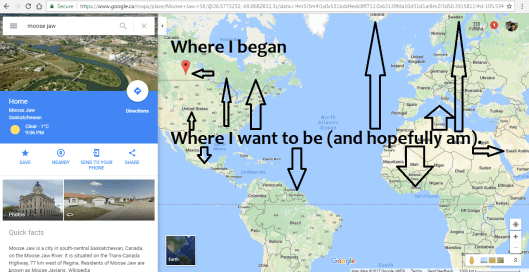
where i am where i began best version.png

“Where I want to be in the world” via Google Maps

Where I began.
In reflecting on what I set out to do in my original outlines, some new barriers to the creation of this prototype revealed themselves, and it all stems back to the original targets I wanted/needed to specifically address and account for: relationships and learners.

  1. Who are my learners and how will I connect? When you have no idea who your learners are, how exactly do you design an asynchronous lesson according to their needs and styles?

    The simplest way to address this, is universal design. When considering multiple forms of expression, engagement, and representation for the module, does my module do this? Does it have more than one opportunity for each? I think so! (Phew!)

  2. And when you only make one module to begin, can you really connect to other content?

    – In my module I found myself saying: “we’ll have to address this next time”, but there isn’t a next time (yet)! Do you plan for the hypothetical or does this make it less authentic?

  3. Does a class need synchronous sessions to be blended? Or can it be pseudo-blended through Flipgrid or Zoom? It is all online, but the learning functions similar to that of a traditional classroom and has some face-to-face components, but these components are not necessarily live. Is ECI 834 considered blended? Or all online?


Closing thoughts

Questions are great, and maybe some of them don’t need to be answered. Ultimately, the course prototype will be out on Tuesday, and I look forward to the learners I reach, and the subsequent feedback I receive to hone my skills. Hopefully it serves my main goal, educating people.


– Logan Petlak